Einstein-Clusters and Quantum-Tilings
|
With a right mouse click on a graphic you can open it in a new tab and study details.
In the new tab use [Ctrl] and [+] to enlarge the graphic.
Describing tiles by self-avoiding walks
|
An Einstein (German for "one stone") is a tile that admits a tiling of the plane but does not allow any periodic tiling.
The Hat-tile, discovered by David Smith in 2022 and published as preprint in March 2023 [1], is the first known example of an Einstein.
It belongs to an infinite set E of such tiles with the following properties:
The tiles are polygons that are topologically equivalent to a disc.
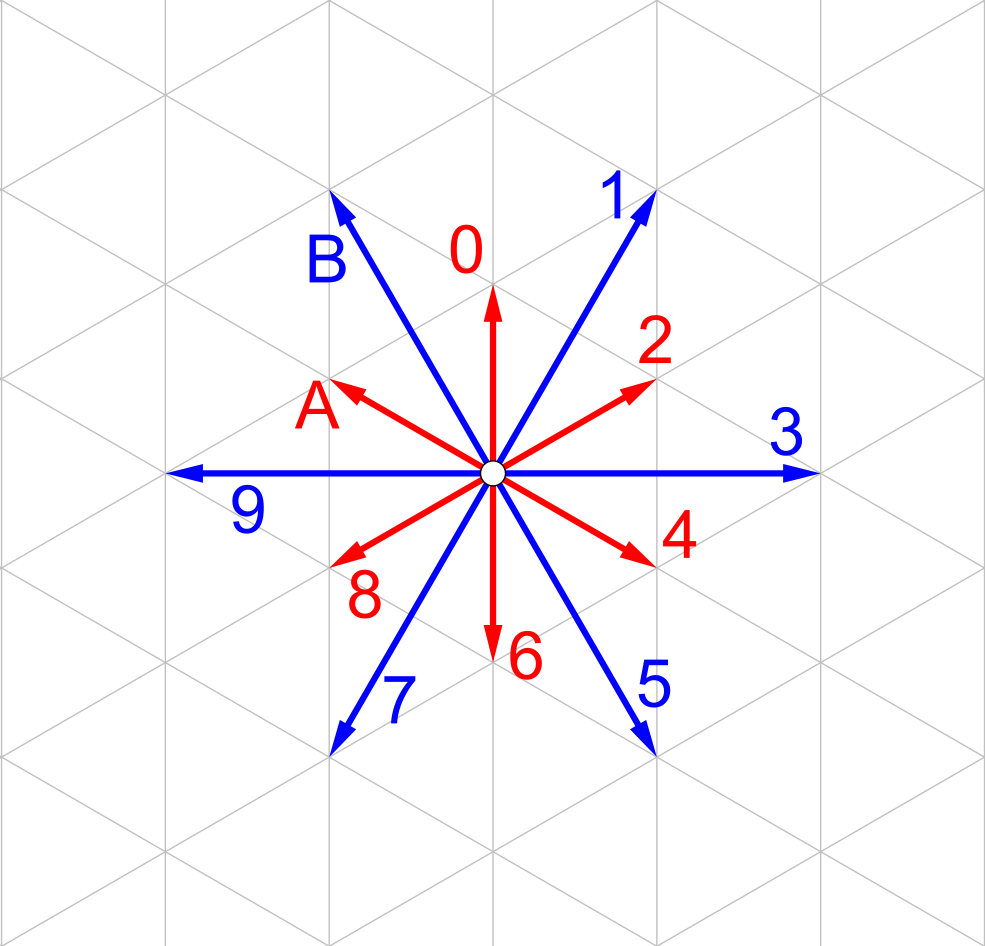
They can be described by self-avoiding walks with steps in 12 distinct directions.
To label these directions, we use the numbers of a clock replacing 10 by A, 11 by B, and 12 by 0.
The steps in the 6 even directions have the length a, while those in the odd directions have length b,
with positive real numbers a and b. The shape of a tile is determined by the ratio a / b.
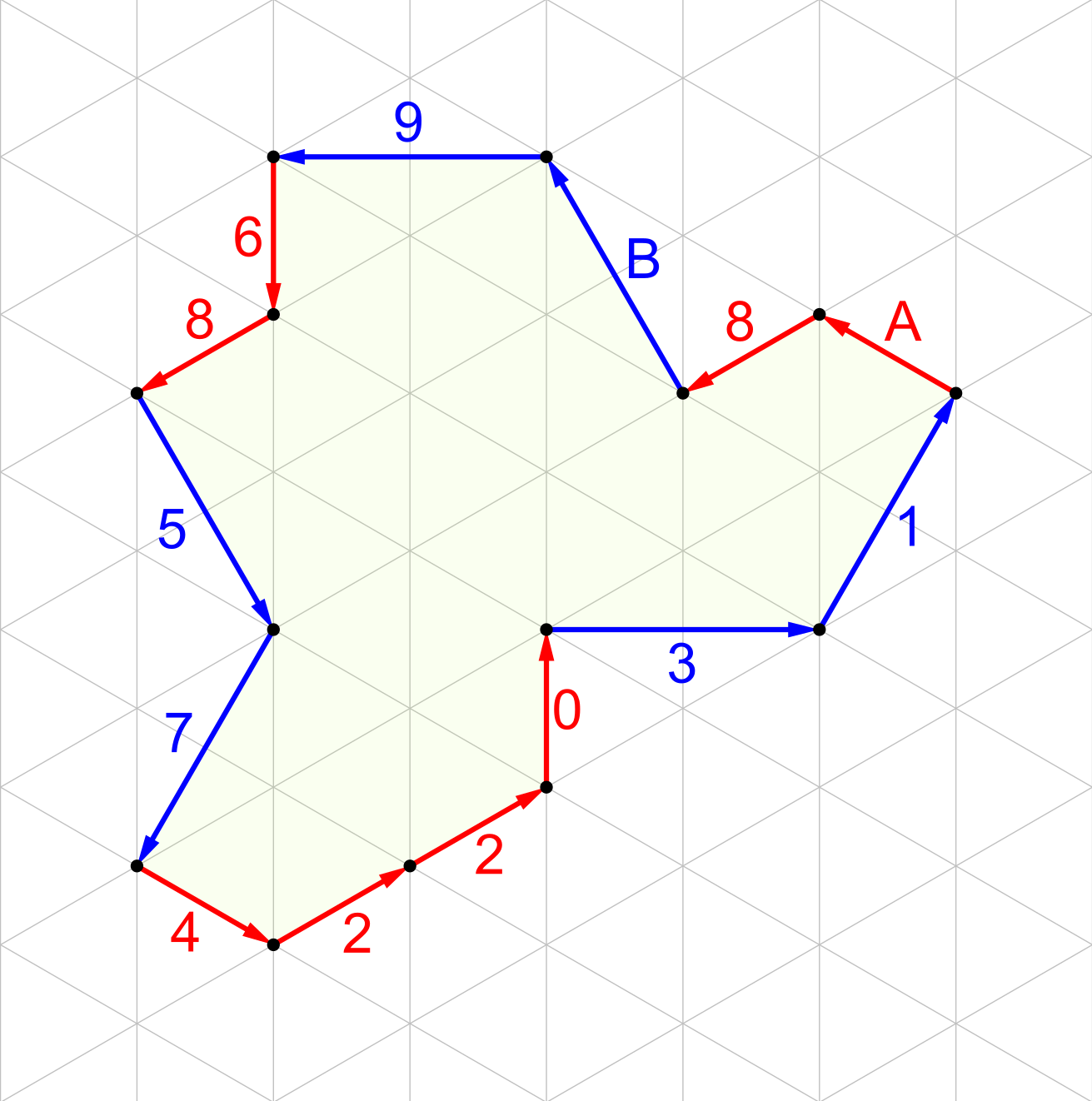
Under these conditions, all tiles of E are described by the same counterclockwise self-avoiding walk
w = 22031A8B968574.
For a = 1 and b = sqrt(3) we obtain the Hat-tile; in this case, the vertices lie on a triangular grid.
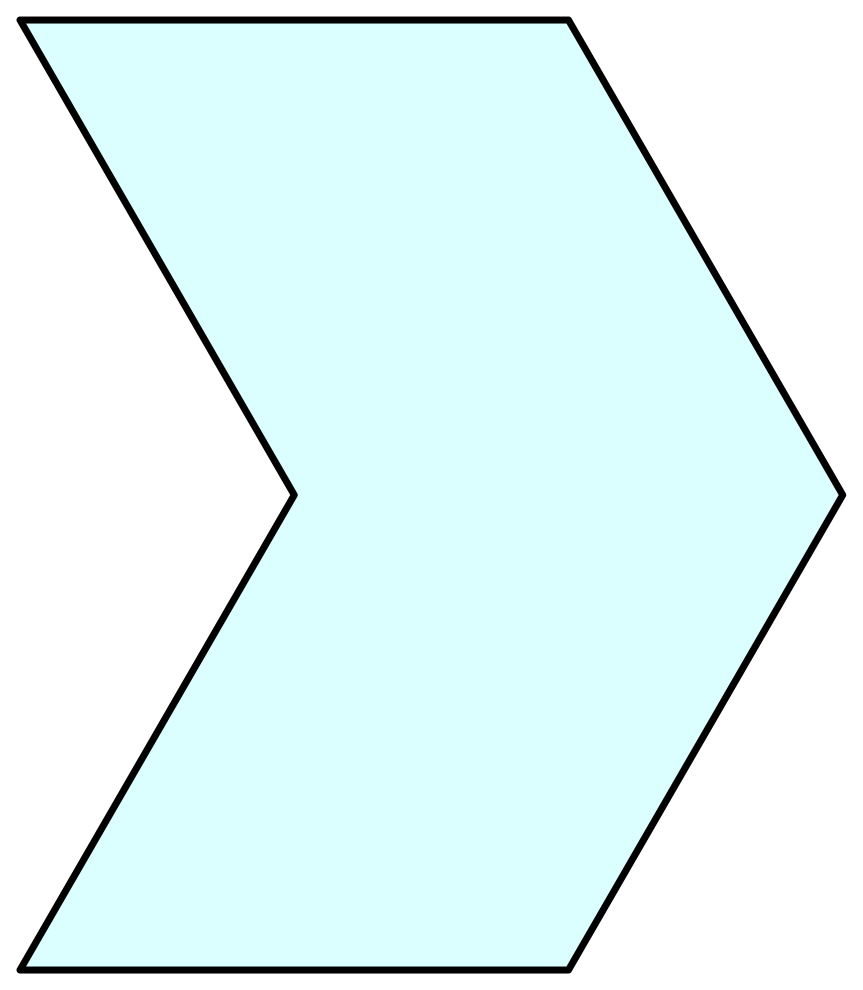
For a=0 and b>0 we obtain the tetriamond Chevron, which admits periodic and non-periodic tilings.
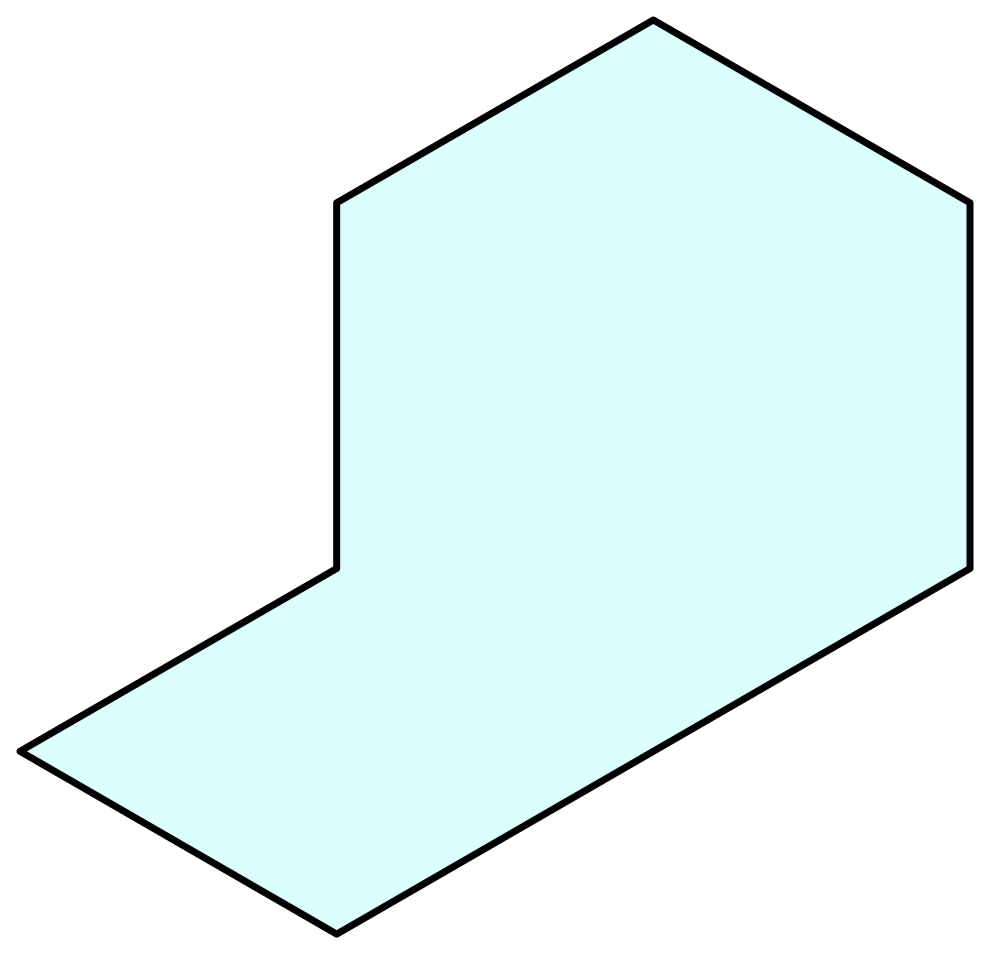
The same is true for the octiamond Comet generated by a>0 and b=0.
Both tiles are not Einsteins and do not belong to E, but they share several properties with the elements of E.
The union of E and the two polyiamonds will be denoted by E2 .
|
Definition: Refer to an element of E2 as (a, b)-tile or tile (a, b), with a, b ≥ 0 and a+b > 0.
|
Tile sequence 1: Chevron (0,1), tile (1,6), tile (1,3), Hat (1,1.73), tile (1,1)
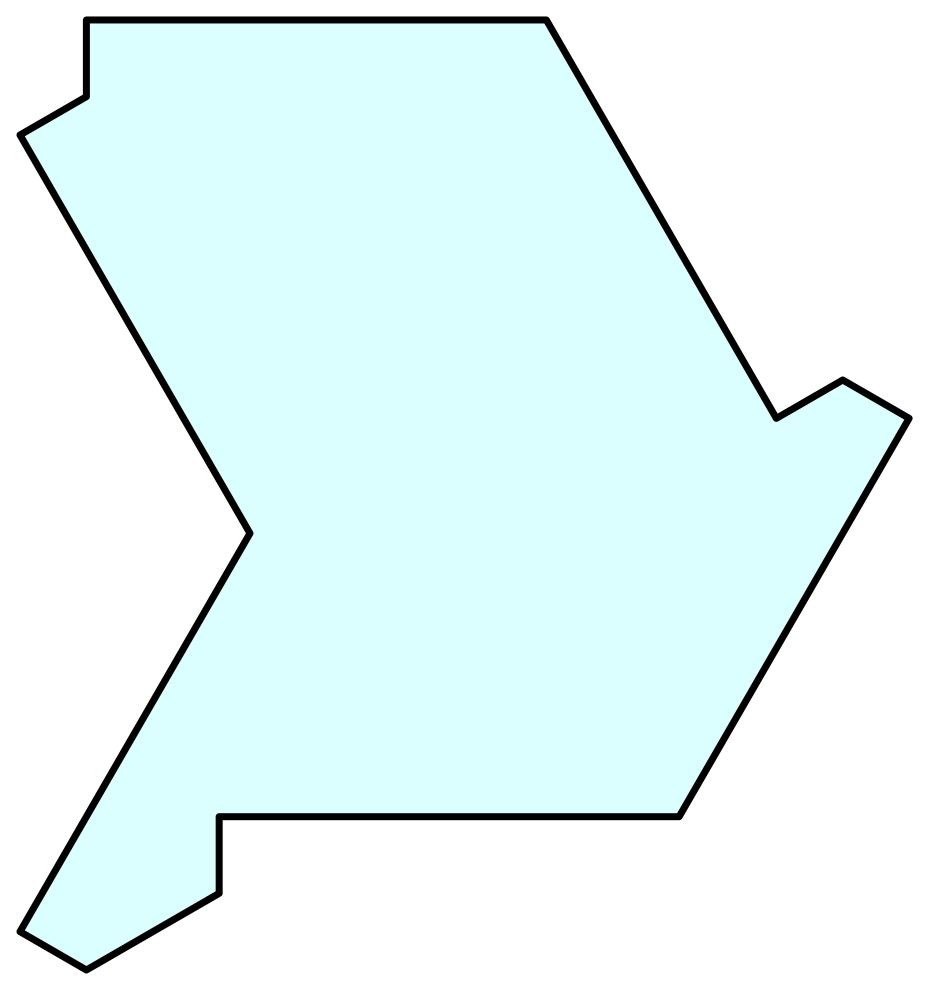
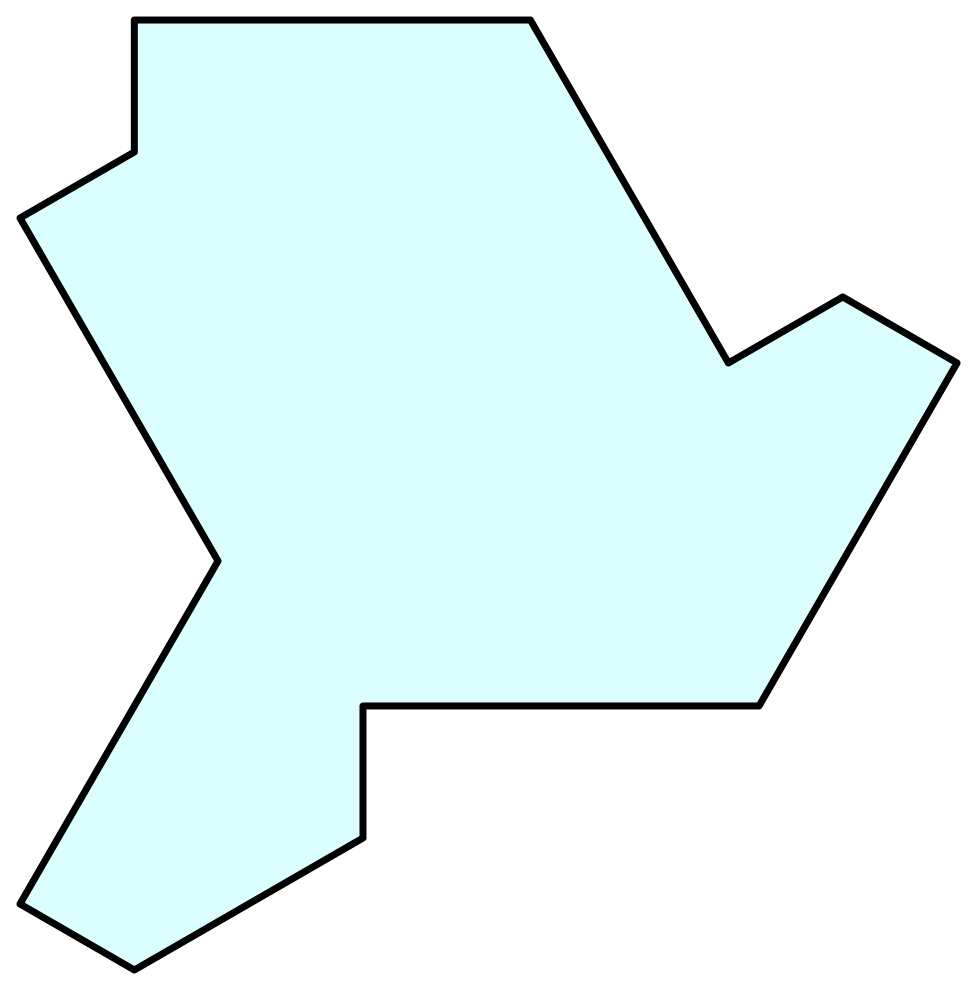
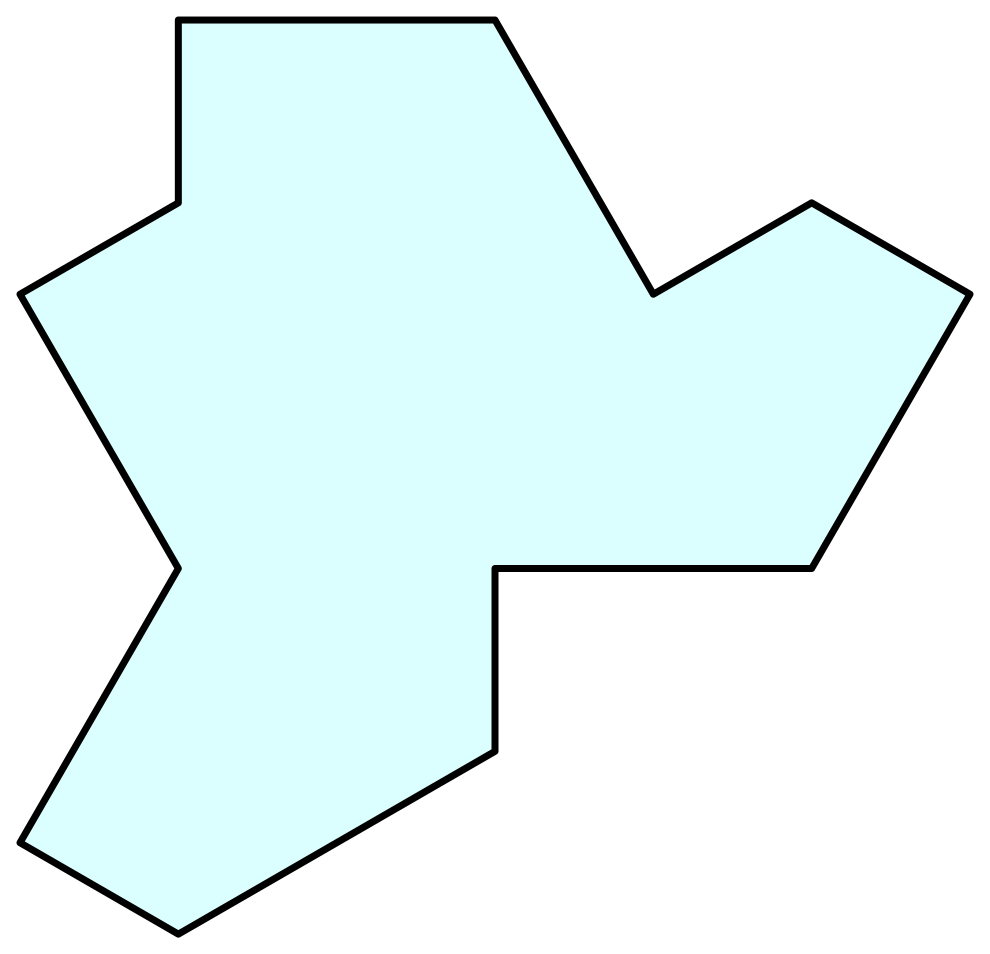
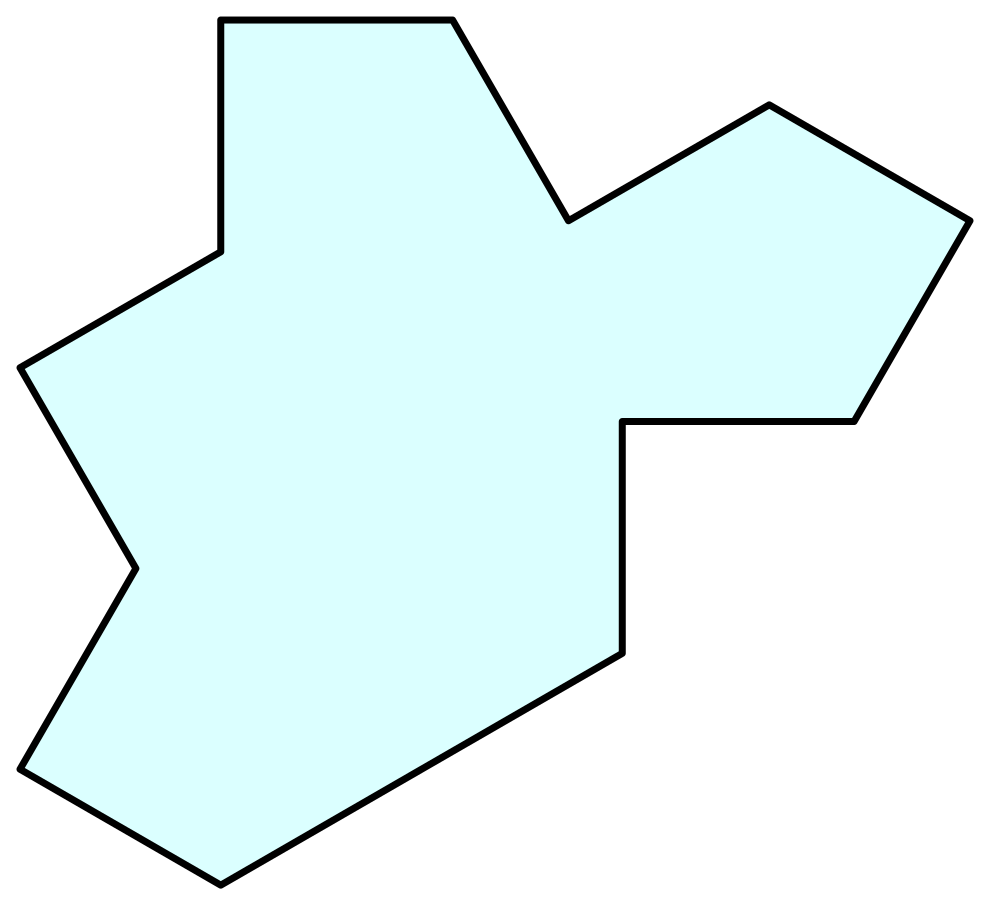
Tiles sequence 2: Comet (1,0), tile (6,1), tile (3,1), Turtle (1.73,1), tile (1,1)
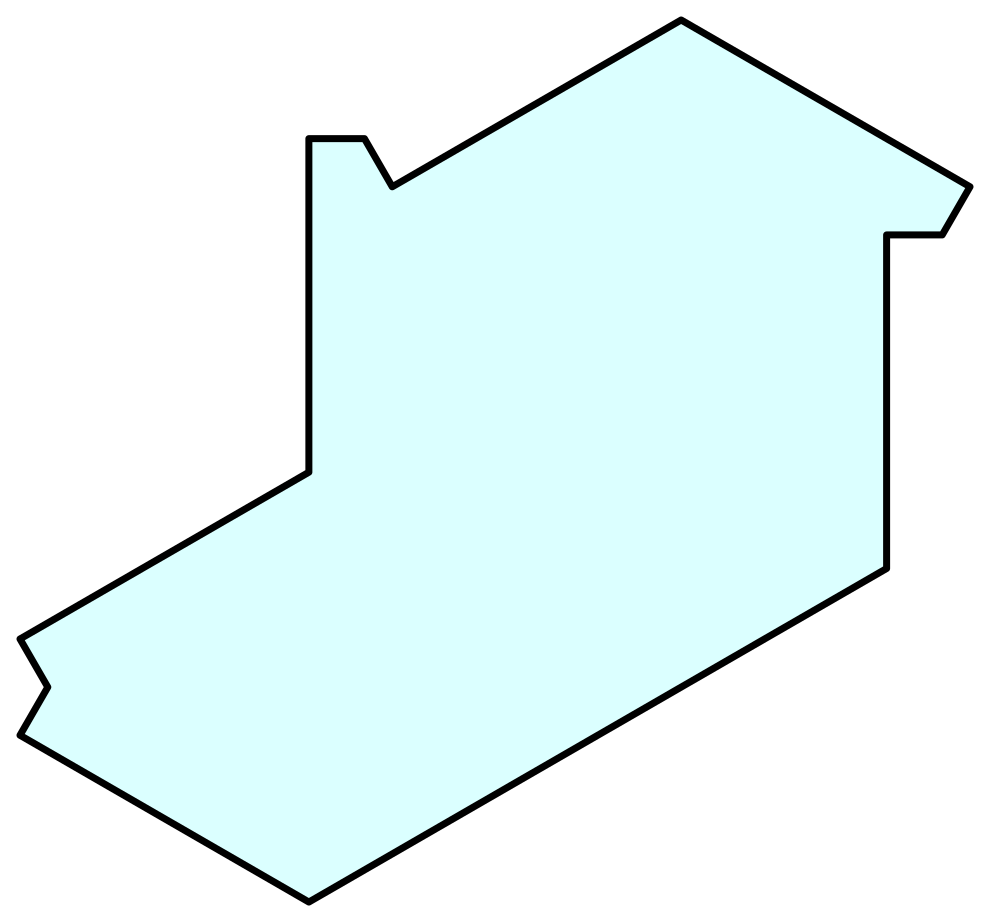
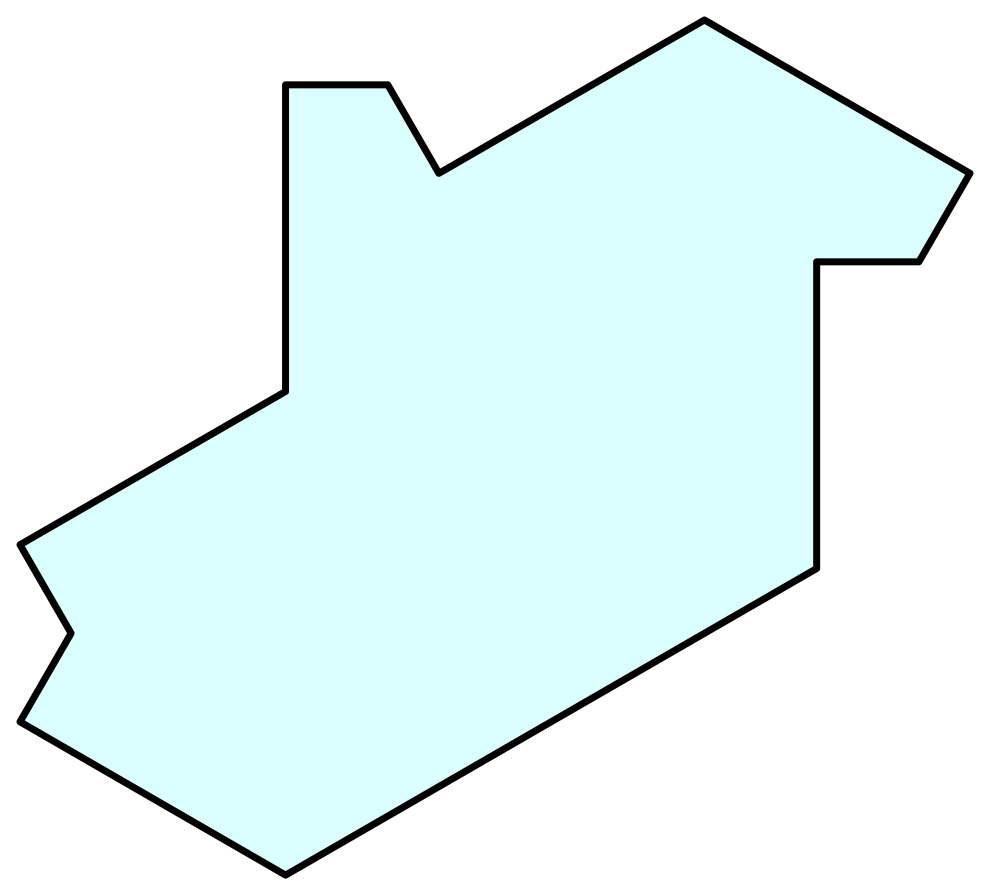
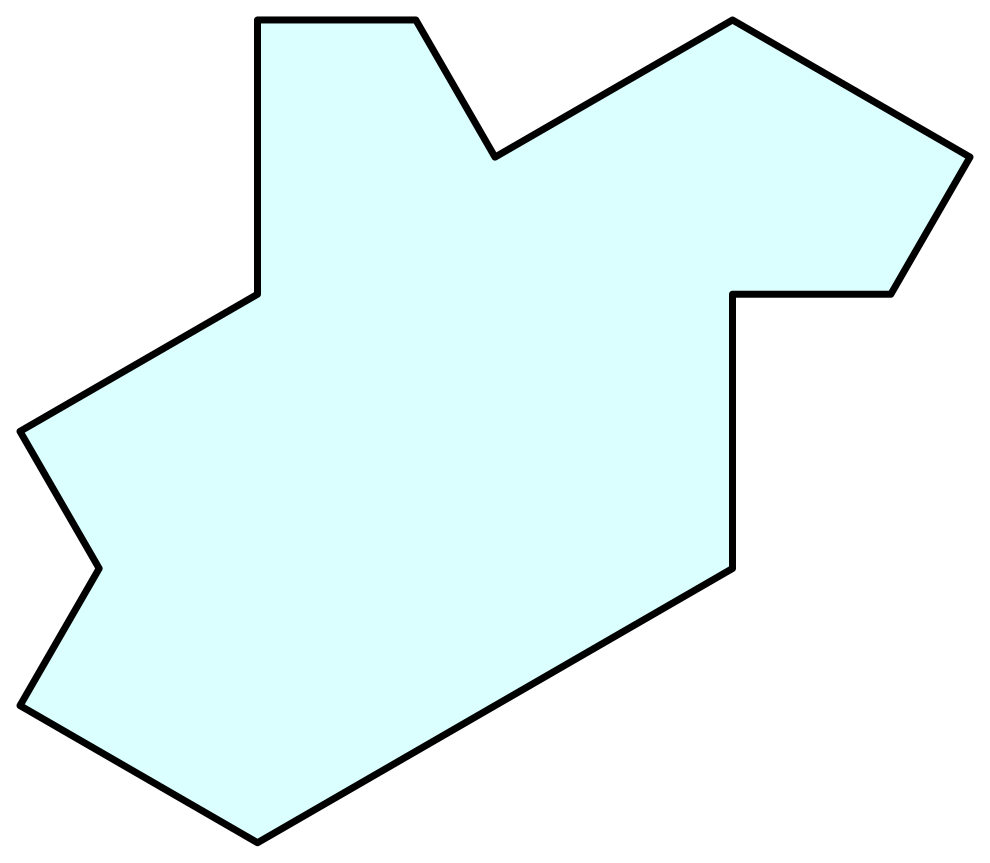
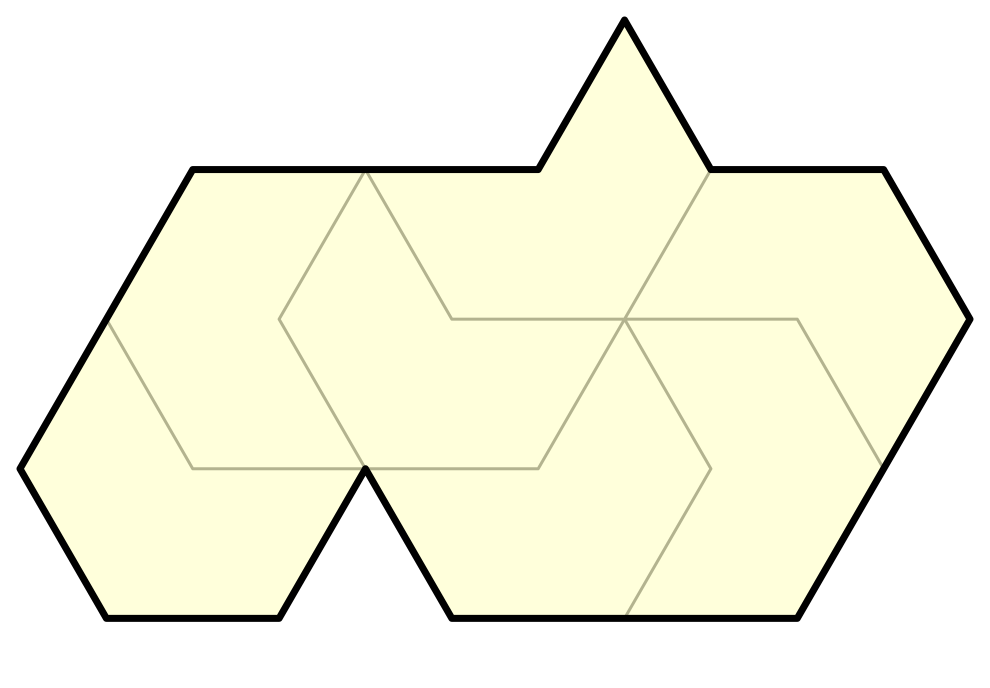
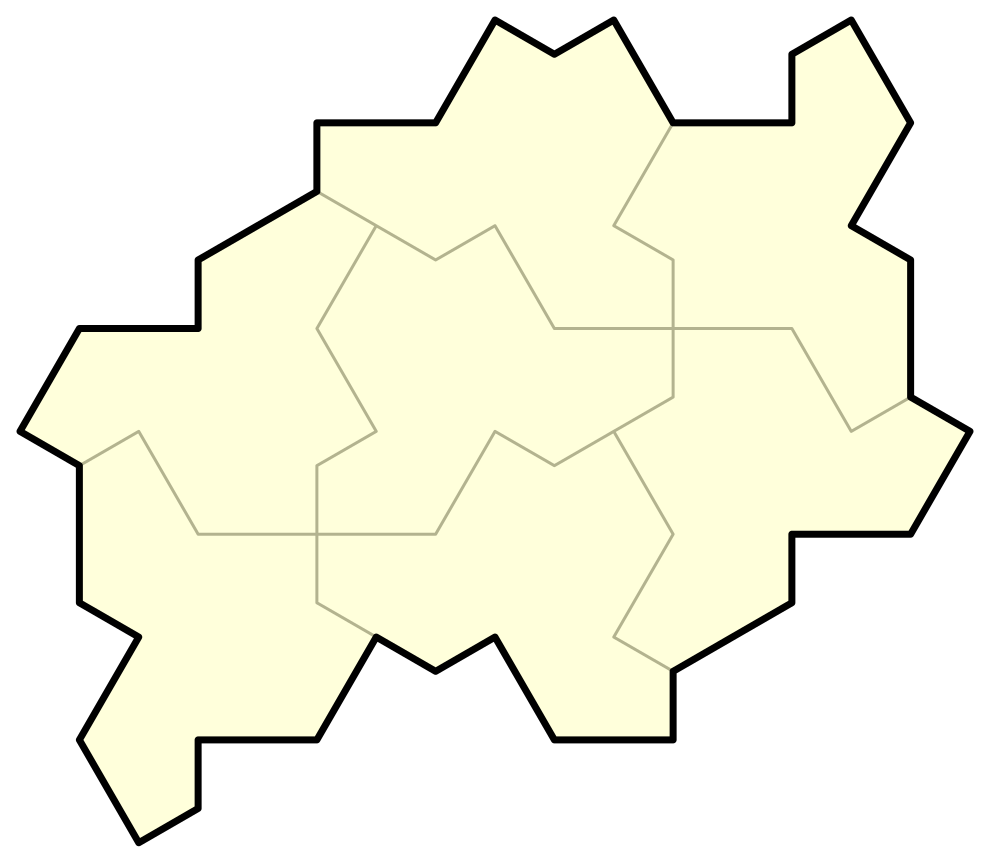
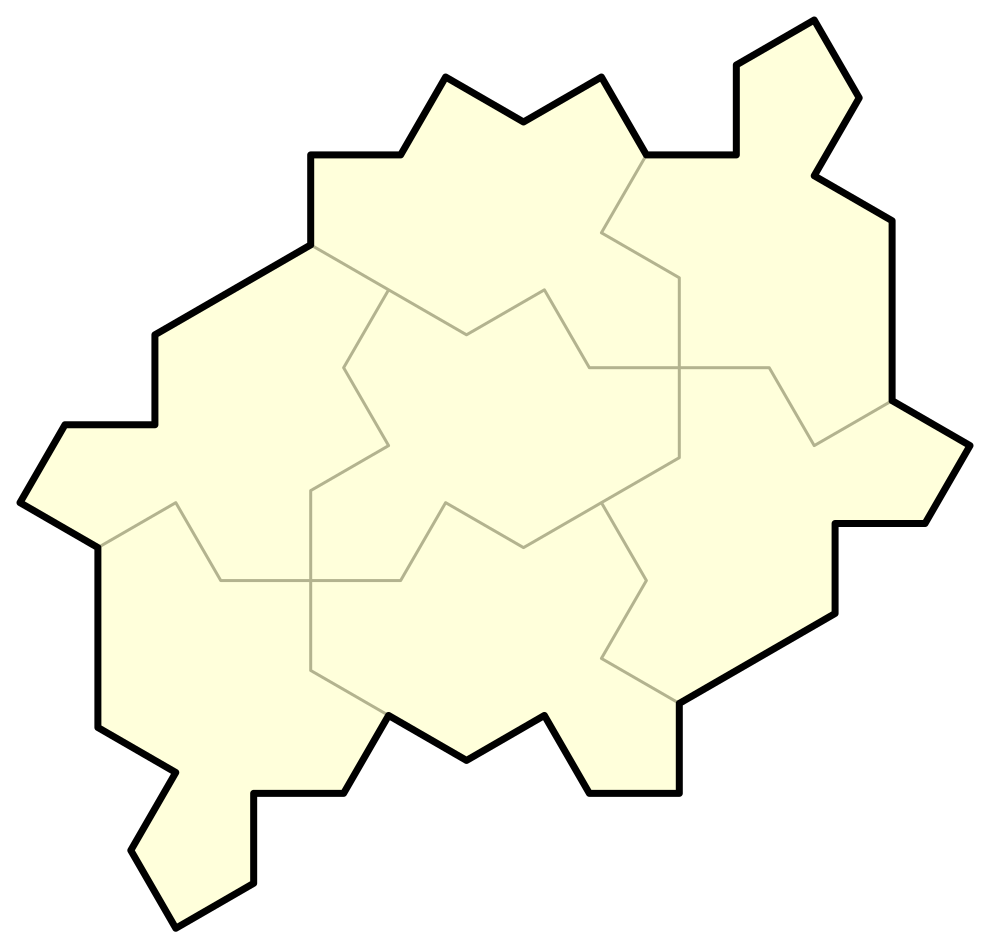
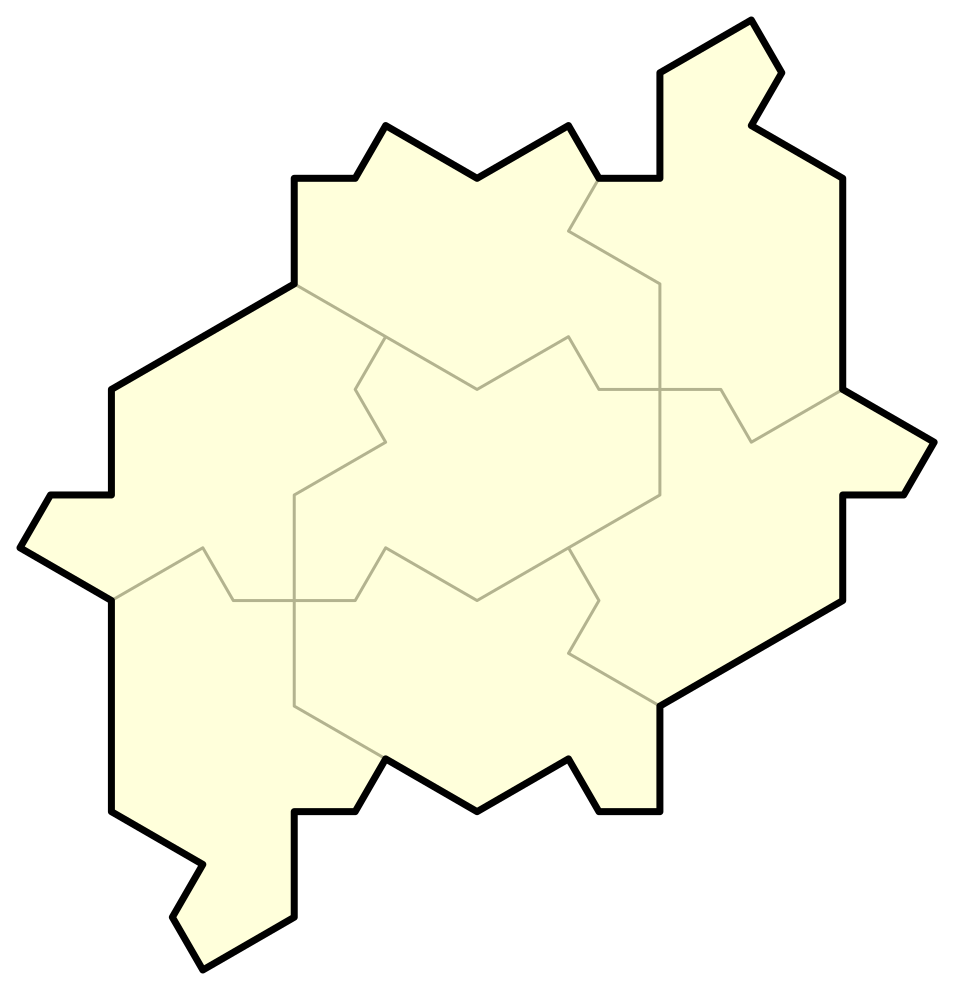
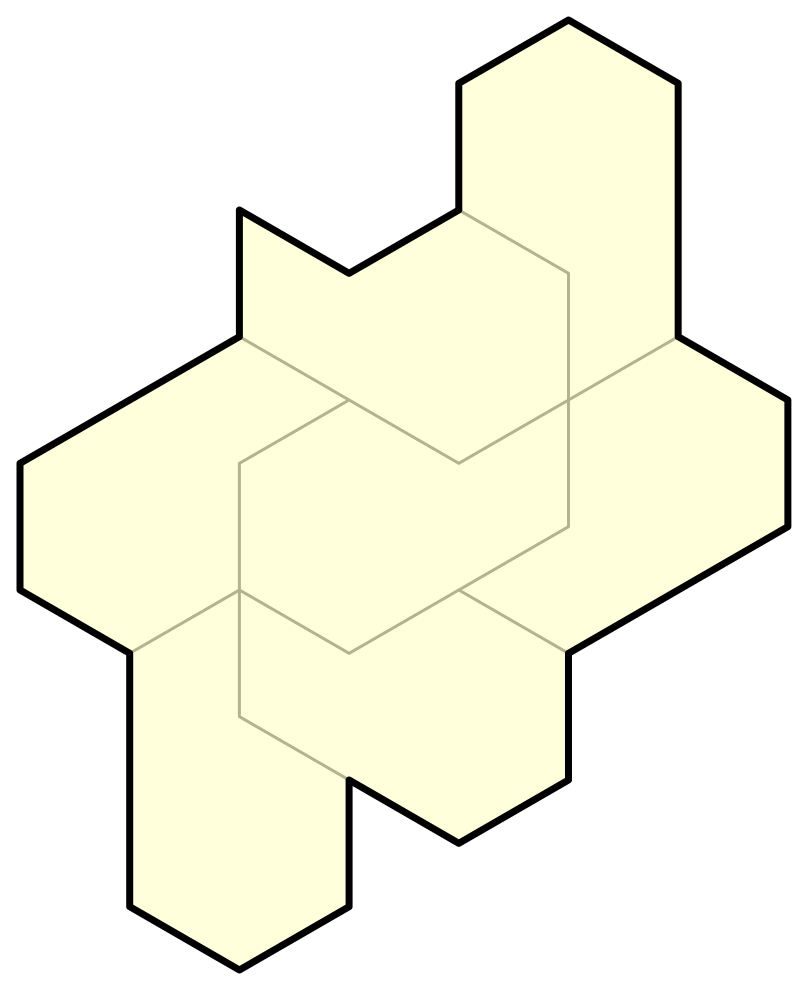
The tiles in E2 can be extended to h7 and h8 supertiles (clusters) [2].
We refer to an h7-cluster as Ma and to an h8-cluster as Pa.
The shapes of these clusters depend only on the parameters a and b of the tile.
Although there are infinitely many such clusters, only the following two walks are needed to describe them:
wpa = A796886974664752442530A13022031A00A1B869B8
wma = A7968869746647520314253022031A00A1B869B8
h8-clusters (Pa) of Chevron (0,1), Hat (1,1.73), tile (1,1), Turtle (1.73,1), Comet (1,0)
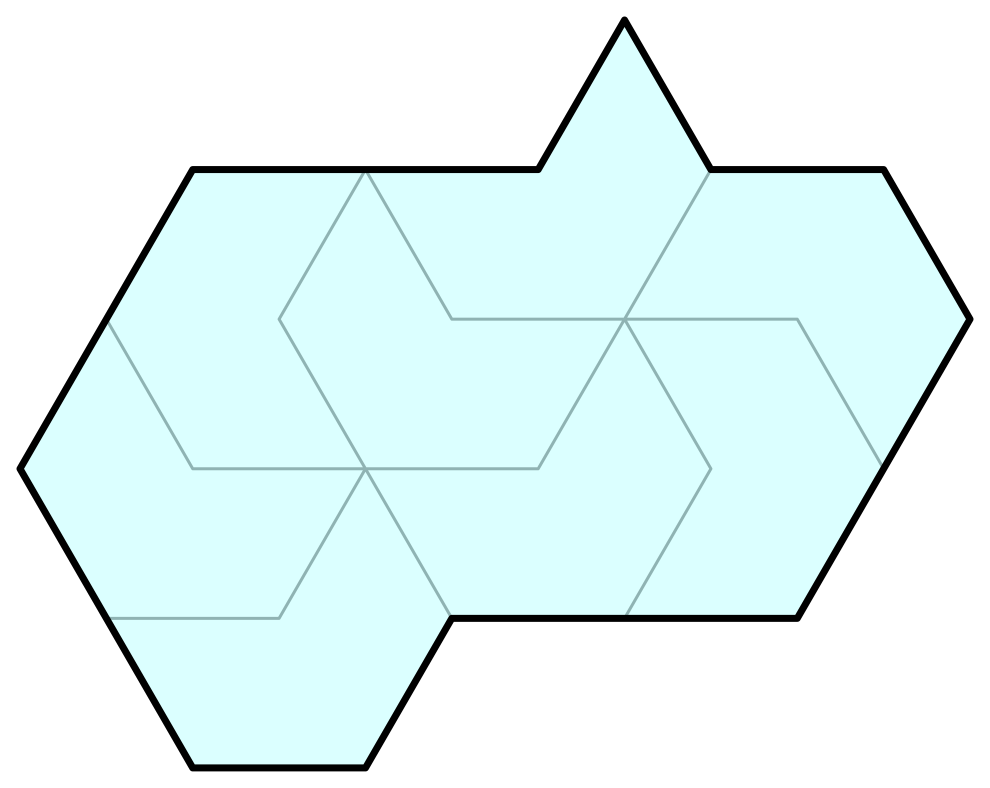
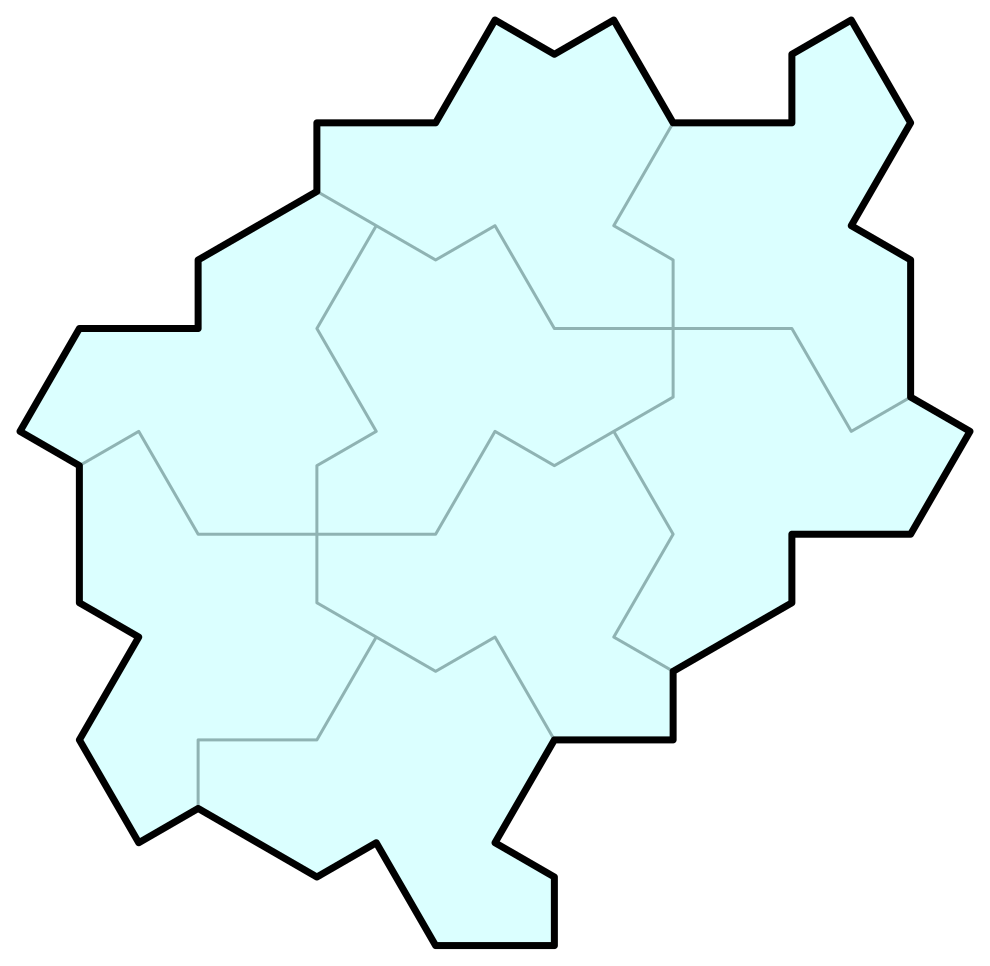
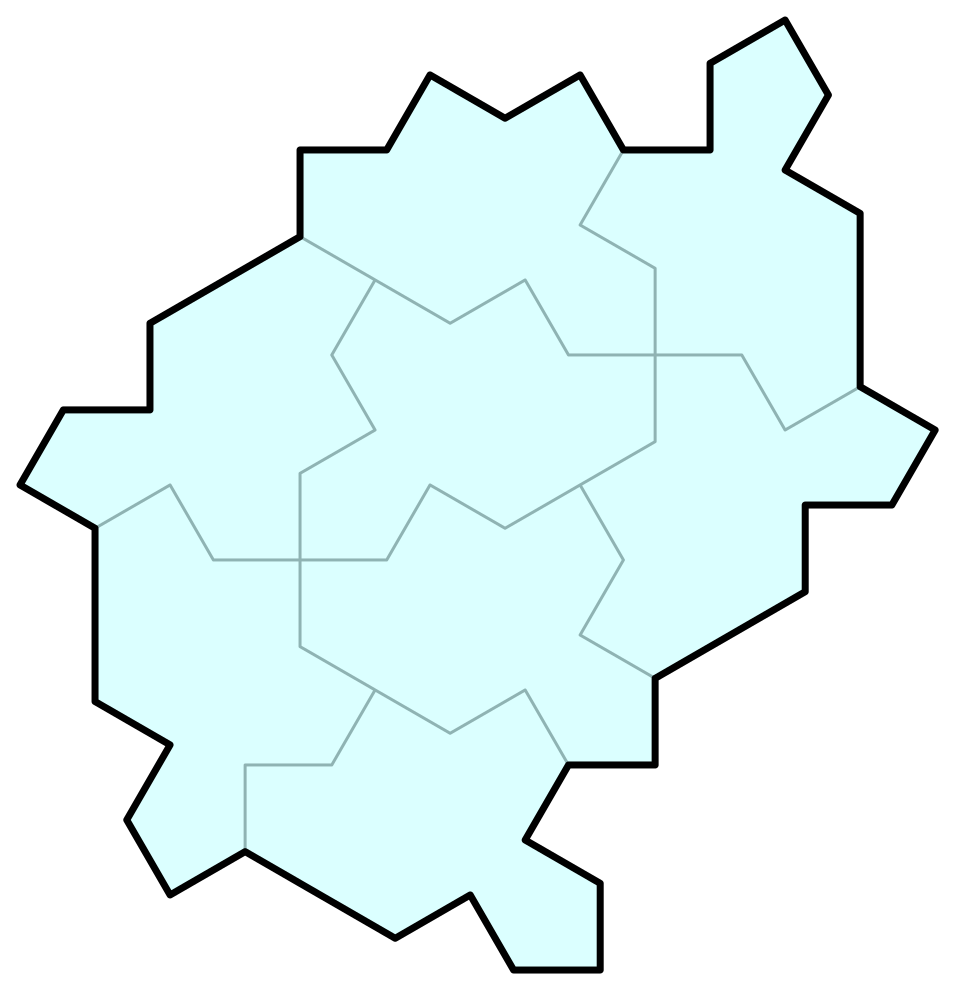
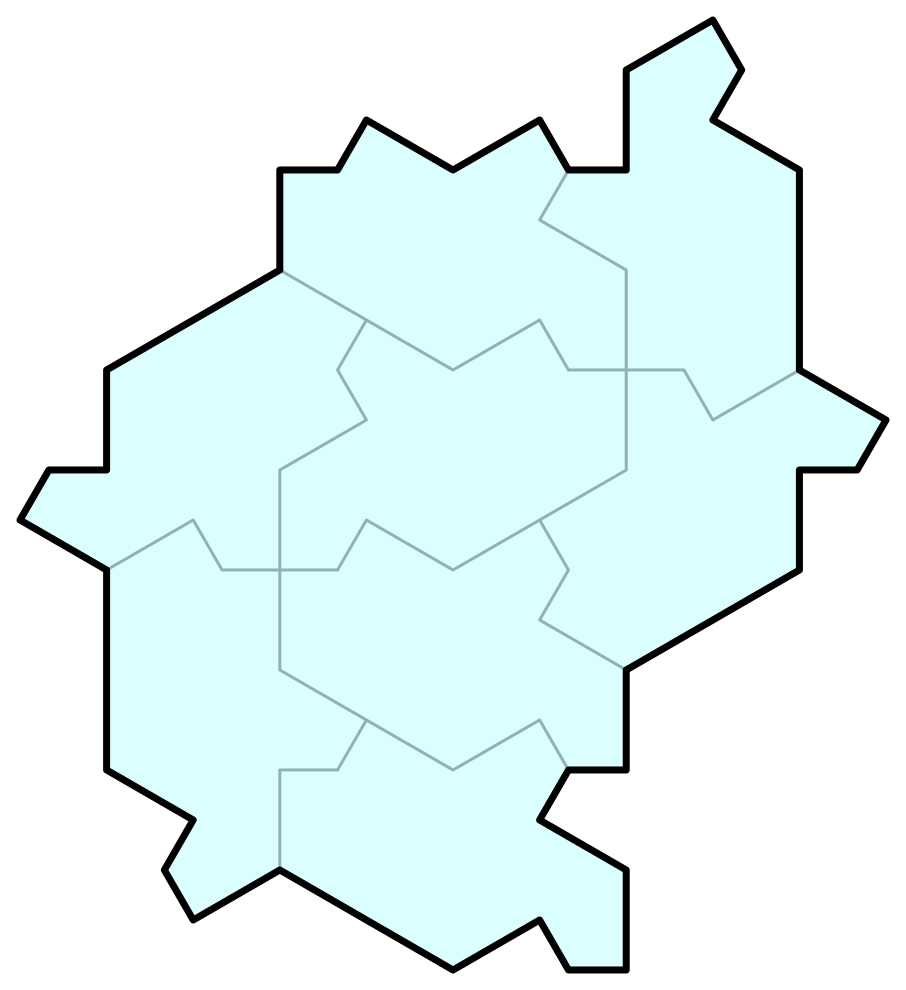
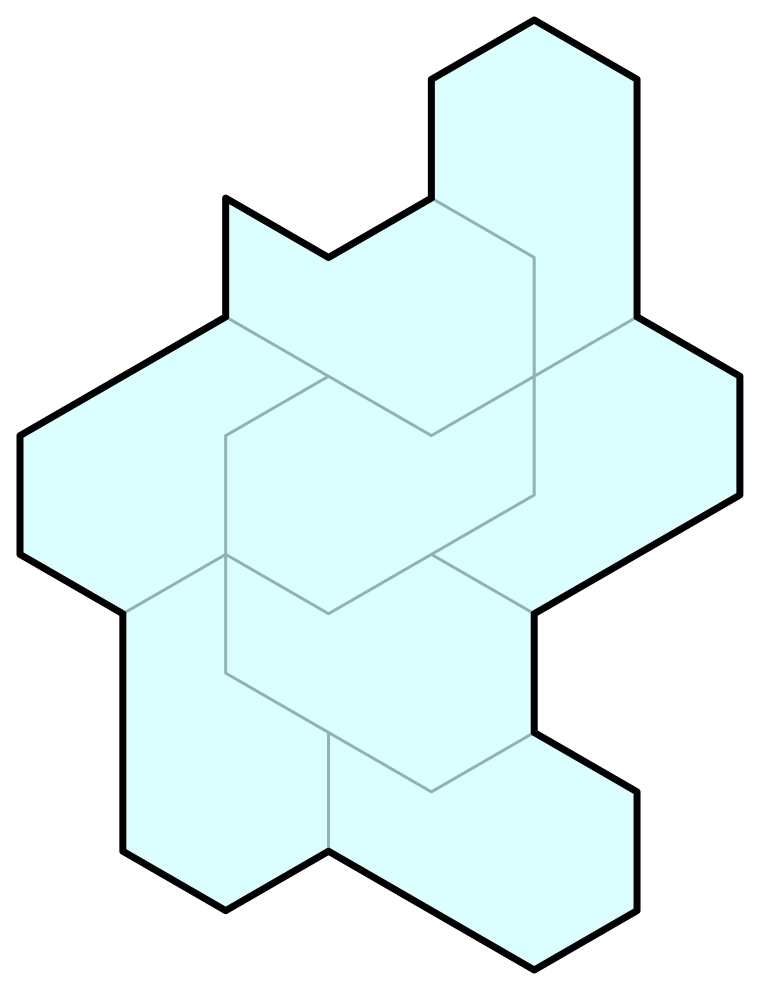
h7-clusters (Ma) of Chevron (0,1), Hat (1,1.73), tile (1,1), Turtle (1.73,1), Comet (1,0)
|
Definition: An (a, b)-Einstein-Cluster tiling is a tiling composed of Pa and Ma clusters of the (a, b)-tile.
|
Abreviation: (a, b)-EC tiling.
According to the common walk descriptions, the cluster pairs (Ma, Pa) of distinct (a, b)-tiles can be transformed into one another.
Therefore, properties of these clusters can be studied by analyzing a single representative.
A convenient choice is the pair of Chevron-clusters as they consist of two relatively small polyiamonds.
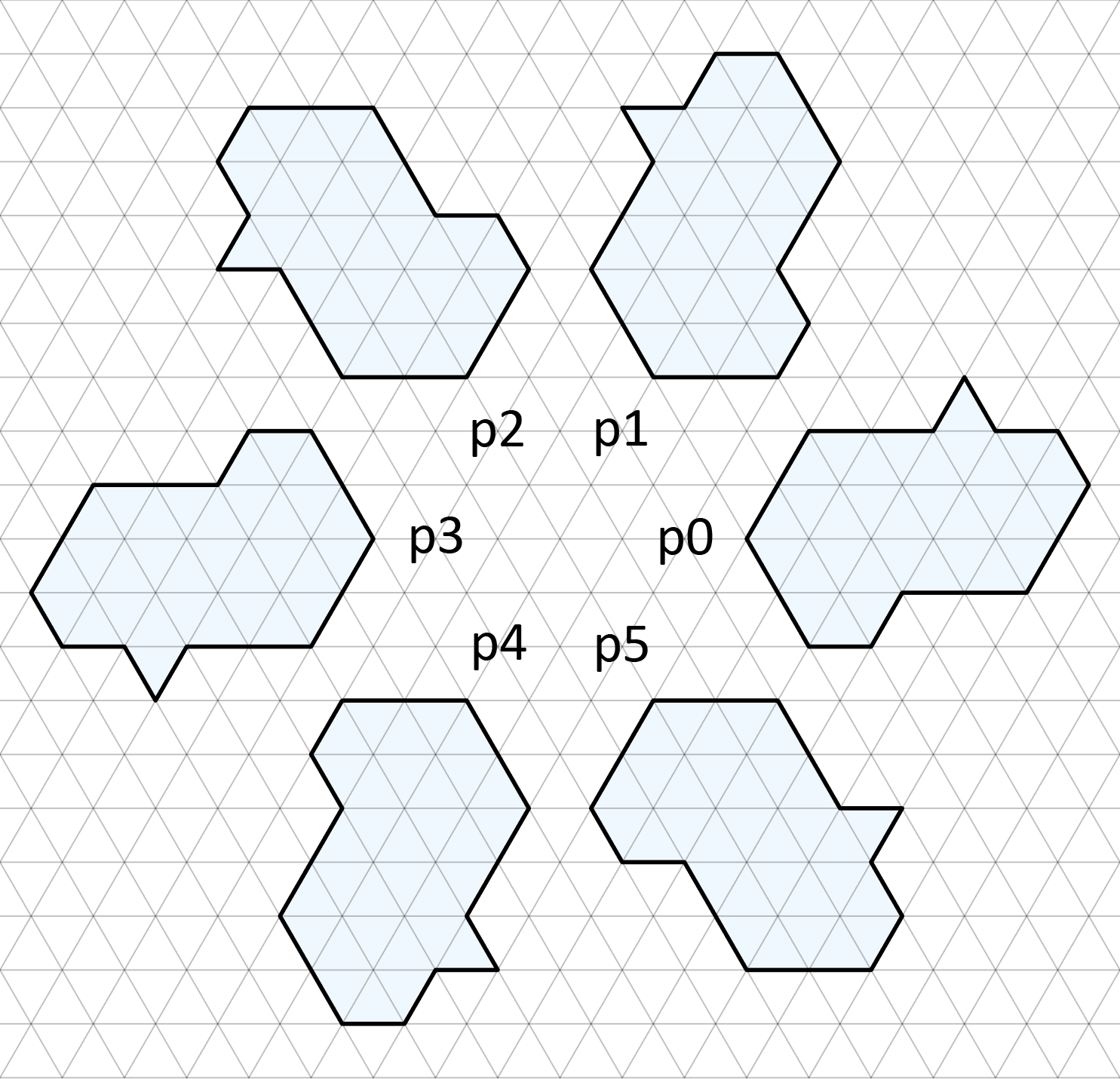
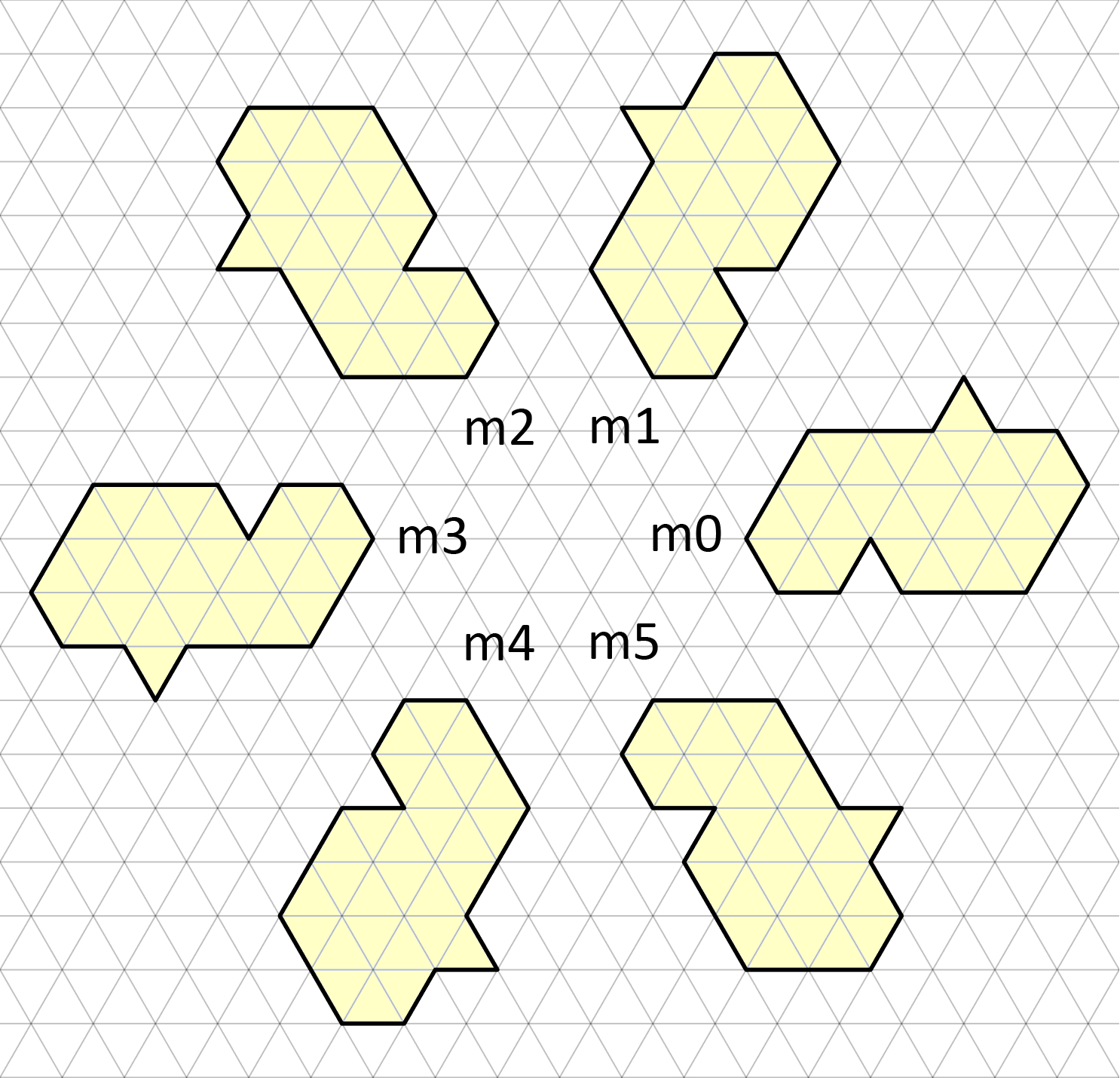
Ortwin Schenker and Amfirifma introduced the names Penguin Pa and Penguin Ma for the tiles representing these two Chevron-Clusters.
The tiles Penguin Pa and Penguin Ma can have 6 distinct orientations (states), which we denote by p0, ..., p5 and m0, ..., m5, respectively.
Definition: A small simply connected patch (i.e., without holes) consisting of three tiles is called Triad if the three tiles share a common point.
No more than three Penguin tiles can meet at a single point. Otherwise, at least two tiles would have to contribute an angle smaller than 90° at the that point.
In particular, two of the Penguin noses would have to meet there, which prevents the placement of any additional tile without overlap.
Using a polyiamond tiling program [3], all possible Penguin Triads can be generated. For most of them, it is straightforward to see that they cannot be extended to a tiling of the plane.
Only for 15 Triads no bound on the number of surrounding coronas could be established.
|
Lemma 1: Up to translations and rotations there exist only 15 Penguin Triads that admit a tiling of the plane.
|
Each of these 15 fundamental Triads occurs in a sufficient large tiling patch generated by [2], and no other Triad appears.
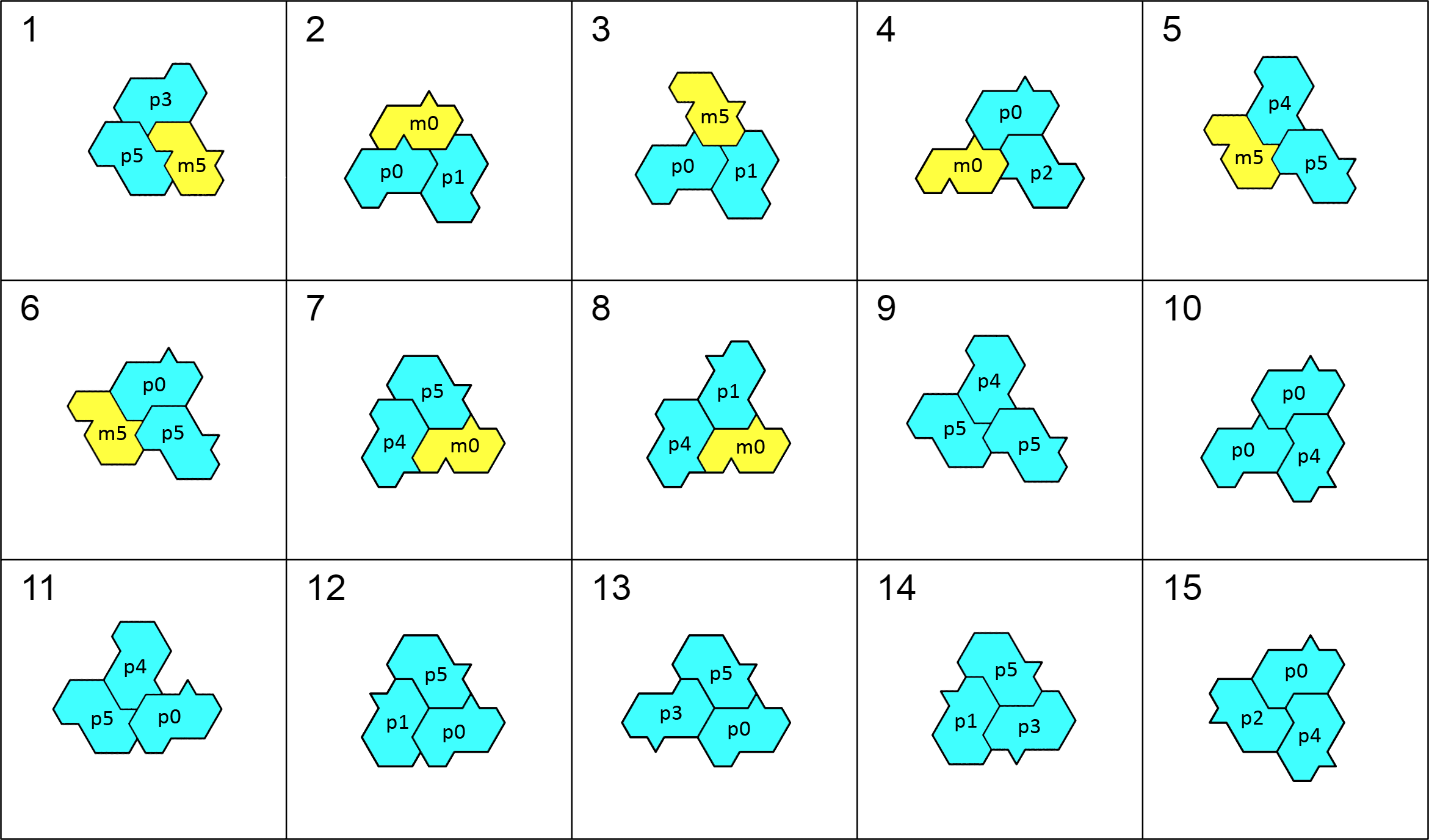
The 15 fundamental Penguin Triads can be transformed into Triads of other (a, b)-Einstein-Clusters.
If there would exist a 16th Triad for any Einstein-Cluster, it could be transformed into a 16th Penguin Triad, which would contradict Lemma 1.
As this has not yet been confirmed by a tiling expert, the conclusion is formulated as a conjecture rather than a proposition.
|
Conjecture 1: For all (a, b)-Einstein-Clusters there exist only 15 Triads (up to translations and rotations) that admit a tiling of the plane.
|
Using program [3] we can study all possible coronas around Penguin Pa and Ma. All coronas consist of exactly 6 Penguin tiles.
And since no more then three tiles can share a common point, we can further state:
|
Conjecture 2: If an (a, b)-Einstein-Cluster patch admits a tiling of the plane, then it is topologically equivalent to a patch of regular hexagons.
|
The two conjectures impose constraints on the neighboring tiles within a patch.
The set of tiles allowed in a cell of a hexagonal grid is encoded by a 12-bit integer.
The six lower bits correspond to Pa-tiles, and the six higher bits to Ma-tiles (bit 0: p0, bit 1: p1, ..., bit 5: p5; bit 6: m0, ..., bit 11: m5).
For example, if the value of a cell is (010001000010)2, then only the tiles p1, p5, or m4 may be placed in that cell.
This encoding allows a program to display not only fixed tiles but also the set of possible tiles for undecided cells.
In analogy with quantum physics, each cell represents a set of possible states.
Placing a single tile constrains the possibilities of other cells, affecting also cells at arbitrarily large distances.
In the Quantum-Tilings program, a hexagonal patch with a single m0 tile placed in the center appears as follows:
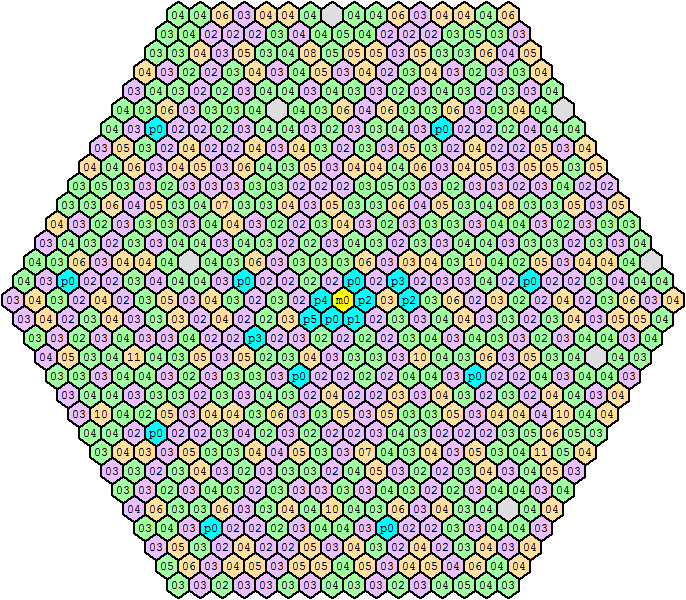
Colors are used to indicate the state of each cell:
Cyan: a fixed Pa tile
Yellow: a fixed Ma tile
Grey: no restrictions (all tiles are possible)
For all other cells, the number of admissible tiles is displayed:
Violet: only Pa tiles are possible, but more than one orientation is available
Green: both Pa and Ma tiles are possible, but the Ma tile has a unique orientation
Orange: both Pa and Ma tiles are possible, with multiple orientations available
It is possible to generate all tilings that can be extended to tile the plane.
However, since the inspection is restricted to a finite region (larger than the hexagon shown),
tilings may also arise that can tile the plane only through successive substitution.
Patches with Einstein-Clusters
|
After selecting tiles for each cell in the Quantum-Tilings program, the hexagonal patch can be saved.
Example:
                  pa1 pa3 pa4 pa3 pa0 pa1 pa3 pa0 pa1 pa0
                pa4 pa3 pa2 pa4 pa2 pa4 pa3 pa2 pa4 ma0 pa2
              pa5 ma3 pa1 pa5 ma4 pa5 ma3 pa1 pa5 pa0 pa1 pa5
            pa4 pa3 pa4 pa3 pa0 pa4 pa3 pa4 pa3 pa0 pa4 pa3 pa0
          pa2 pa4 pa2 ma2 pa2 pa2 pa4 pa2 ma2 pa2 pa2 pa4 pa2 pa4
        pa1 pa5 ma4 pa3 pa0 pa1 pa5 ma4 pa3 pa0 pa1 pa5 ma4 pa5 ma3
      pa4 pa3 pa0 pa4 pa2 pa4 pa3 pa0 pa4 pa2 pa4 pa3 pa0 pa4 pa3 pa2
    pa5 pa5 ma5 pa5 ma4 pa5 pa5 ma5 pa5 ma4 pa5 pa5 ma5 pa5 ma3 pa1 pa5
  pa1 pa3 pa0 pa1 pa0 pa4 pa3 pa0 pa1 pa0 pa4 pa3 pa0 pa1 pa3 pa4 pa3 pa0
pa4 pa3 pa2 pa4 ma0 pa2 pa4 pa2 pa4 ma0 pa2 ma2 pa2 pa2 ma1 pa2 ma2 pa2 pa2
  ma3 pa1 pa5 pa0 pa1 pa5 ma4 pa5 pa0 pa1 pa3 pa0 pa1 pa5 pa1 pa3 pa0 pa1
    pa4 pa3 pa0 pa4 pa3 pa0 pa4 ma0 pa2 ma1 pa2 pa4 pa3 pa0 ma1 pa2 pa4
      pa5 ma5 pa5 pa5 ma5 pa5 pa0 pa1 pa5 pa1 pa5 pa5 ma5 pa5 pa1 pa5
        pa0 pa1 pa3 pa0 pa1 pa0 pa4 pa3 pa0 pa1 pa3 pa0 pa1 pa0 pa1
          pa2 ma1 pa2 pa4 ma0 pa2 pa4 pa2 pa4 pa3 pa2 pa4 ma0 pa2
            pa5 pa1 pa5 pa0 pa1 pa5 ma4 pa5 ma3 pa1 pa5 pa0 pa1
              pa0 pa1 pa0 pa4 pa3 pa0 pa4 pa3 pa4 pa3 pa0 pa4
                pa4 ma0 pa2 ma2 pa2 pa2 ma2 pa2 ma2 pa2 pa2
                  pa0 pa1 pa3 pa0 pa1 pa3 pa0 pa1 pa0 pa1
|
Definition: A hexagonal array filled with symbols from {pa0, ..., pa5, ma0, ..., ma5} is called symbolic EC-patch, if all Triads in this array are fundamental Triads or their rotations.
|
|
Conjecture 3: From a symbolic EC-patch an (a, b)-Einstein-Cluster patch can be derived for all a, b ≥ 0 with a+b > 0.
|
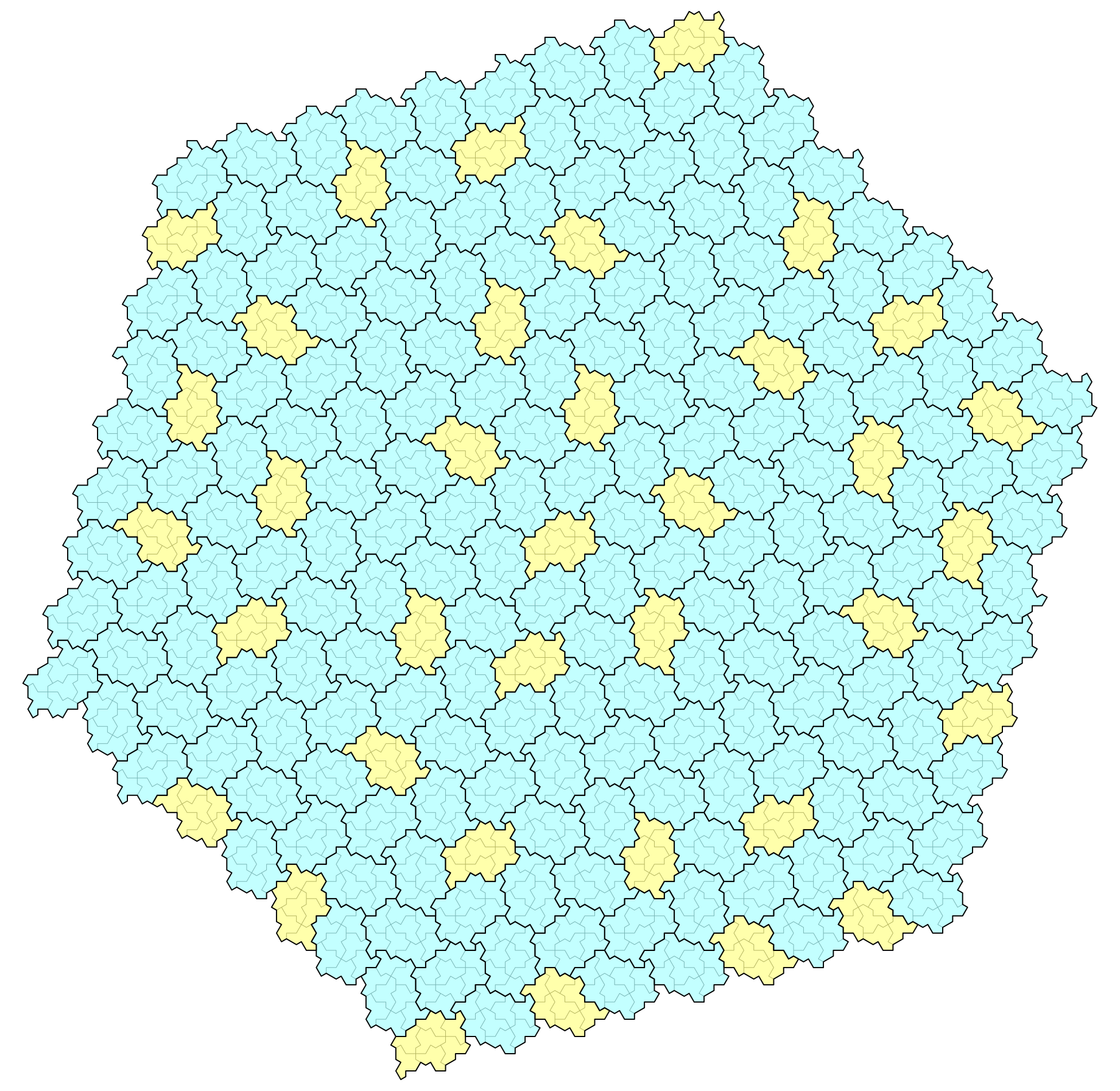
Using the separate program "Draw-Einstein-Clusters.Exe", different Einstein-cluster tilings can be exported as an SVG files. For example, the pair of hat clusters:
Since the graphic is constructed from one triple point to another, tiles at the boundary are not included.
Please download and extract the zipped folder "Quantum-Tilings": Quantum-Tilings.zip
Start the program 'Quantum-Tilings-08.Exe' direct in the folder. An installation of the program is not necessary.
Press the key 'E' (or 'e') and you obtain a hexagon with side length 8 on a hexagonal grid.
Click with right (Pa) or left (Ma) mouse key on the white cell in the center, then press a number key from '0' to '5'.
In this way you can place one of the clusters p0, ..., p5, m0, ..., m5 in the center cell.
Now the program inspects the other cells in order to find out which clusters are allowed there.
The cells are colored and get labels. See description at the end of chapter 'Quantum-Tilings' above.
The size of the considered hexagon is given in the name of the program. If you want a hexagon of size 24, rename the program as 'Quantum-Tilings-24.Exe'.
Available sizes: 3 to 50. For large hexagons the inspection will take much time, up to several hours.
It is suggested to save the quantum tiling after the first inspection, then it can be loaded when you use the program again.
It is possible to load quantum tilings into smaller hexagons but not vice versa.
All tilings are saved in the folder 'Tilings'.
In a quantum tiling you can click on any cell that is not fixed in order to place a certain cluster there.
Then the remaining cells are inspected. If all cells are fixed, a tiling patch is complete and it can be saved as "H-Tiling.txt" (hexagonal tiling) in the folder 'Tilings'.
The program 'Draw-Einstein-Clusters.Exe' allows to load a tiling patch (H-Tiling) and save the patch for certain (a, b)-Einstein-Clusters as SVG file.
All SVG files are saved with a number, like 'tiling-0005.svg'. Rename the files to specify the included tiling.
Freeware Disclaimer
[1] David Smith, Joseph Samuel Myers, Craig S. Kaplan, and Chaim Goodman-Strauss, An aperiodic monotile, March 2023,
Arxiv preprint
[2] Craig S. Kaplan, h7- and h8-supertiles
[3] Arnaud Chèritat, Tiling Applet
[4] Walter Trump, Quantum Tilings
Walter Trump, Nürnberg, Germany, ms(at)trump.de, © 2026-04-03 (last modified: 2026-04-24)